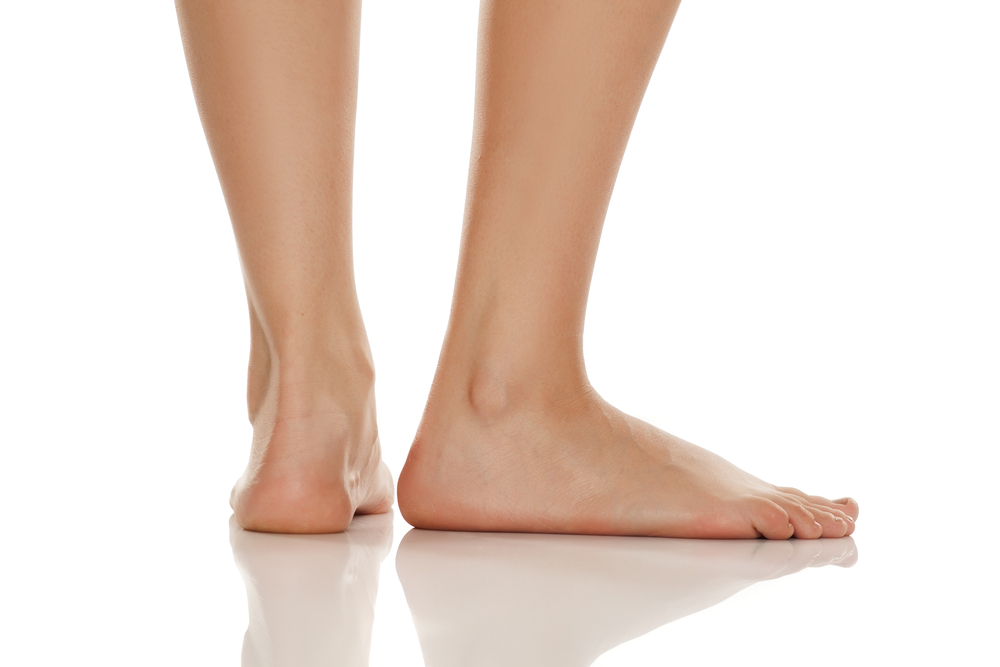
Kinetic wedges in foot orthotics are specialized tools designed to improve how our feet function. These wedges work to adjust the position of the foot during movement, helping to relieve pressure and promote better alignment. The design of kinetic wedges often includes sloped surfaces that can guide the foot into a more natural posture. This design aims to alter weight distribution across the foot and improve overall stability, which is crucial in addressing various foot problems.
The theoretical framework that supports the use of kinetic wedges is based on how the foot interacts with the ground and the forces involved in walking and running. One key concept is the unified approach to podiatric biomechanics proposed by Harradine and Bevan in 2009. This perspective emphasizes the need to understand the foot as a dynamic structure that plays a significant role in the body’s overall biomechanics. Kinetic wedges fit within this framework as they are designed to facilitate proper biomechanics and redistribute forces effectively, leading to better motion efficiency and reduced pain.
Further backing the use of kinetic wedges in foot orthotics is research by Williams and Nester from 2010, which highlights their ability to enhance biokinematics—the study of motion in human biomechanics. Kinetic wedges can support natural foot movement while counteracting the negative effects of certain foot conditions. This application is particularly important as it emphasizes that proper foot positioning through the use of these wedges can lead to improved performance and decreased risk of further injury. Additionally, recent studies such as those by Martinez-Rico et al. in 2024 stress the importance of tailoring foot orthotics to meet individual patient needs. Personalized kinetic wedges can be created based on a patient’s specific foot shape, the mechanics of their gait, and the unique challenges they face. This customization ensures that the orthotics work effectively for the individual, maximizing their therapeutic benefits.
Kinetic wedges have proven to be beneficial for a variety of common foot conditions. One significant condition they address is structural hallux limitus, which is characterized by limited motion in the big toe. Martinez-Rico et al. discuss how kinetic wedges can alter the foot’s biomechanics to alleviate stress on the first metatarsophalangeal joint. By improving the alignment and motion of the foot, these wedges can help reduce pain and maintain mobility.
Another area of impact for kinetic wedges is in the treatment of flat foot conditions. Research by Chen et al. in 2024 indicates that these orthotics can positively influence lower limb kinematics. Flat feet can lead to problems such as overpronation, which can cause pain in various parts of the body, including the knees and hips. By using kinetic wedges, the pronation can be managed effectively, leading to improved alignment and decreased strain on the joints.
In summary, the design and application of kinetic wedges in foot orthotics hold essential benefits for treating foot conditions. Their ability to enhance biomechanics and cater to individual needs makes them a valuable tool in modern podiatric care. By addressing specific issues, they can help improve patient outcomes and enhance overall foot health and mobility., Kinetic wedges in foot orthotics have proven to be beneficial in enhancing patient outcomes, particularly in how they affect biomechanics. One of the key improvements observed with kinetic wedges is in joint alignment and motion mechanics. According to a study by Gómez-Carrión et al. (2024), using kinetic wedges helps to properly align the bones in the foot and ankle, allowing for smoother motion during walking and running. This better alignment can lead to less pain and overall improved function for individuals with various foot conditions.
Another specific benefit highlighted by Gómez-Carrión et al. (2024) is the enhancement of dorsiflexion, which is the ability to flex the foot upwards towards the shin. In healthy feet, proper dorsiflexion is essential for effective movement and balance. The study noted that using kinetic wedges, even in asymptomatic individuals, led to noticeable improvements in their dorsiflexion. Therefore, not only do kinetic wedges help those with existing foot problems, but they can also promote better foot mechanics in people without visible issues, potentially preventing future complications.
In addition to scientific studies, practitioner beliefs play a crucial role in the application of kinetic wedges. Surveys conducted among podiatrists in New Zealand by Jackson et al. (2021; 2025) revealed insights into how often these devices are used and the reasons behind their selection. Many practitioners expressed that they believe kinetic wedges effectively address a range of foot conditions. This belief translates into their clinical practice, leading to greater acceptance and use of such orthotic solutions in treating patients.
Moreover, recent findings from Jackson et al. (2023) indicate a strong relationship between practitioner beliefs and patient outcomes. When podiatrists have confidence in the benefits of kinetic wedges, they tend to employ them more extensively, which can result in higher patient satisfaction. This connection suggests that clinical beliefs not only influence treatment choices but can also directly impact how patients feel and function.
The transformation kinetic wedges bring to patient experiences is significant across various foot conditions. According to research by Kirby et al. (2012), many patients reported quantifiable improvements in mobility and comfort after using these orthotics. Patients often describe a noticeable difference in their ability to walk longer distances without pain and an overall increase in their daily activities.
Furthermore, the implications for podiatric rehabilitation are vast. As discussed in the JOINT report (2024), integrating kinetic wedges into treatment plans allows for a more individualized approach. It supports a shift from generic orthotic solutions to ones that actually meet patients’ specific needs, leading to better overall outcomes. The combination of scientific evidence, practitioner insights, and improved patient experiences clearly illustrates how kinetic wedges play an essential role in foot orthotics, benefitting patients with various foot conditions.
Citations:
Williams, A.E. and Nester, C., 2010. Pocket Podiatry: Footwear and Foot Orthoses E-Book: Pocket Podiatry: Footwear and Foot Orthoses E-Book. Elsevier Health Sciences. https://books.google.com/books?hl=en&lr=&id=aBMoTTxI1Z4C&oi=fnd&pg=PT2&dq=Kinetic+wedge+foot+orthotics+benefits+and+applications+in+podiatry+treatments&ots=fZ25GTFRpE&sig=jXulvziyt4nv2RxKInBA6F3BFmI
Jackson, A., Sheerin, K., Reid, D. and Carroll, M.R., 2025. Beliefs About and Use of Forefoot Lateral Wedging in Podiatric Medical Practice: A Survey of Podiatric Physicians in New Zealand. Journal of the American Podiatric Medical Association, 115(1). https://japmaonline.org/view/journals/apms/115/1/22-022.xml
Jackson, A., Sheerin, K., Reid, D. and Carroll, M., 2021. Beliefs and Use of Forefoot Lateral Wedging in Podiatric Practice: A Survey of Podiatrists in Aotearoa New Zealand. https://www.researchsquare.com/article/rs-944617/latest
Kirby, K.A., Spooner, S.K., Scherer, P.R. and Schuberth, J.M., 2012. Foot orthoses. Foot & Ankle Specialist, 5(5), pp.334-343. https://journals.sagepub.com/doi/abs/10.1177/1938640012458900
Harradine, P. and Bevan, L., 2009. A review of the theoretical unified approach to podiatric biomechanics in relation to foot orthoses therapy. Journal of the American Podiatric Medical Association, 99(4), pp.317-325. https://japmaonline.org/view/journals/apms/99/4/0980317.xml
Jackson, A., Sheerin, K., Reid, D., Molyneux, P. and Carroll, M.R., 2023. Lateral wedging of the foot: a scoping review. Journal of the American Podiatric Medical Association, 113(5). https://japmaonline.org/view/journals/apms/113/5/21-180.xml
Gómez-Carrión, Á., Sánchez-Gómez, R., Reguera-Medina, J.M., Martínez-Sebastián, C., Márquez-Reina, S., Coheña-Jiménez, M. and Moisan, G., 2024. Effect of using a kinetic wedge during the hallux dorsiflexion resistance test in asymptomatic individuals. BMC Musculoskeletal Disorders, 25(1), p.409. https://link.springer.com/article/10.1186/s12891-024-07520-z
Martinez-Rico, M., Gijon-Nogueron, G., Ortega-Avila, A.B., Roche-Seruendo, L.E., Climent-Pedrosa, A., Sanchis-Sales, E. and Deschamps, K., 2024. Effect of custom-made foot orthotics on multi-segment foot kinematics and kinetics in individuals with structural hallux Limitus. Sensors, 24(19), p.6430. https://www.mdpi.com/1424-8220/24/19/6430
Chen, H., Sun, D., Fang, Y., Gao, S., Zhang, Q., Bíró, I., Tafferner-Gulyás, V. and Gu, Y., 2024. Effect of orthopedic insoles on lower limb motion kinematics and kinetics in adults with flat foot: a systematic review. Frontiers in Bioengineering and Biotechnology, 12, p.1435554. https://www.frontiersin.org/journals/bioengineering-and-biotechnology/articles/10.3389/fbioe.2024.1435554/full
JOINT, T., 2024. Foot Orthoses. Orthotics and Prosthetics in Rehabilitation-E-Book, p.158. https://books.google.com/books?hl=en&lr=&id=F5AzEQAAQBAJ&oi=fnd&pg=PA158&dq=Kinetic+wedge+foot+orthotics+benefits+and+applications+in+podiatry+treatments&ots=b56QR_1mI5&sig=KmjhYN5RCTrAkOzFSU2g00rhMmI

University lecturer, runner, cynic, researcher, skeptic, forum admin, woo basher, clinician, rabble-rouser, blogger, dad.