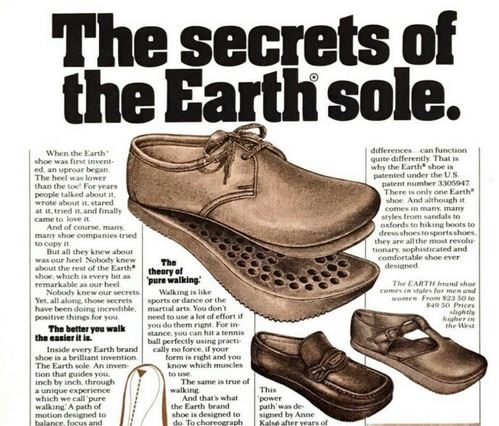
Running shoes built for minimalism aim to mimic how feet move outside a bulky sole. Light in weight, they sit low to the ground – heel less than toe – and store little shock absorption underfoot. Because of this setup, the body taps into a subtle feedback loop, sensing every slight contact with pavement or trail. Look down at shoes like these – they wear their simplicity bare. A soft footrest, almost paper-thin underfoot, tells you something right away. Instead of thick cushions, you see woven threads or mesh so gentle it bends when you tug. These aren’t the bulky trainers packed with shock-absorbing layers. Every bit feels loose, like something left unfinished on purpose.
Some runners think minimalist shoes do them good. A big plus? They make foot muscles work harder. With fewer cushions, the body steps in to support each stride. Less padding means tighter control, some say. As a result, movement while running tends to become smoother, helping athletes modify how they step and pace without extra effort (Perkins et al., 2014). Those supporting lightweight shoe designs say such footwear encourages an organic way of hitting the ground, possibly supporting healthier feet long term.
Lately, more people choose barefoot-style sneakers when picking shoes for sports. Because runners started noticing how feet move on impact, curiosity shifted toward natural motion. Experts began pointing out better alignment, softer landings, fewer injuries – so simpler shoes gained attention over time (Sun et al., These days, runners aren’t chasing thick soles. What’s risen is a need – shoes that let you stay close to the ground, feel everything.
Still, even with the perks minimalist shoes bring, some issues come along too. Think about people trying these out – they might get hurt more easily, especially if they usually wear bulky models. Jumping straight from common kicks to bare-bones ones? Body parts can rebel. Feet may scream from the shift in how they’re held and padded. Bones, ligaments, even strings inside muscles grumble. That kind of shock needs patience, not sprinting (Grier et al., Some find it hard to start, knowing a shift needs time. Feet change slowly without space to grow. Research shows waiting helps long term. In 2016, findings backed earlier work from 2012. Mistakes happen when timing gets missed. This pause lets bodies adapt properly.
Still, minimalist running shoes offer clear advantages – like stronger feet and better efficiency on track – but those gains sit alongside real dangers that any serious runner must weigh. Choosing them isn’t just about wanting to try something new; how your body moves and how you log miles matters deeply in whether these shoes help or harm. For some, that balance lands favorably. Others might find the trade-off too steep. Their rise among active groups wasn’t accidental. People keep coming back, drawn by the promise of moving closer to barefoot ease without true exposure. Shoes like these weigh next to nothing, built with minimal cushioning compared to regular runners’ gear. Strength in the foot muscles can grow when wearing such designs, possibly reducing risk of harm along the way. Studies mentioned by Dubois and team show these traits clearly over time Foot movements change when people try minimalist running shoes. Research by Buist et al. (2015) along with Marshall (2013) indicates that moving to such shoes activates deeper muscle units inside the foot. Stronger foot structures might follow, possibly cutting down harm to lower body areas. A more balanced way of hitting the ground could lower odds of typical runner issues arising.
On top of that, less bulky shoes might just help athletes move faster. Research by Fuller and team (2015) showed people running in minimal designs used less energy while moving at quicker strides – speed differences popped up now and then. Runners often find it easier to move well when their shoes sit closer to the earth. Less bulk means fewer drag effects over distance. Because these models weigh less, effort stays balanced across stride lengths. Some people report sharper reactions to each step taken. That shift in sensation tends to make full effort last longer into morning training. Fewer parts also mean less stress building up mid-lap. People switching often mention staying warm under cooler skies.
Still, there are clear downsides to think about. Even though certain runners notice improvements in minimalist shoes, evidence shows beginners tend to feel more discomfort and suffer more injuries. Work led by Ryan and others in 2014, along with findings from Agresta’s team around the same time Moving to barefoot-style shoes? Some people struggle at first. Jumping straight into them may hit wrong. Without thick soles underfoot, legs and feet need time to reset. Comfort drops fast when padding vanishes overnight. Newbies often feel off-balance during runs. Injuries creep in when motion patterns go out of sync. Slowing down the change helps more than rushing forward. Body rhythms shift slowly after years of cushioning. Jumping models work better once habit reshapes itself.
Look at how athletic shoes change over time – they shift between old styles and fresh ideas. Certain well-known names now add simpler elements but keep soft support underfoot. According to Nigg and team in 2015, blending these traits creates options that take advantage of barefoot-inspired gear without losing safety or ease. When runners look for shoes that fit them just right, brands now offer more than one good option. Choices have widened so people can find what works best for their lifestyle.
Running shoes must fit every person differently. Foot shape matters just as much as how someone runs or where they are on their training journey. Learning more about minimalist options could make choices clearer – what works well, what does not. When talk about running shoes keeps going, knowing what each person likes becomes key – along with how different models affect both speed and well-being – for where new running equipment is headed next.
Citations:
Perkins, K.P., Hanney, W.J. and Rothschild, C.E., 2014. The risks and benefits of running barefoot or in minimalist shoes: a systematic review. Sports Health, 6(6), pp.475-480. https://journals.sagepub.com/doi/abs/10.1177/1941738114546846
Fuller, J.T., Thewlis, D., Tsiros, M.D., Brown, N.A. and Buckley, J.D., 2015. The long-term effect of minimalist shoes on running performance and injury: design of a randomised controlled trial. BMJ open, 5(8), p.e008307. https://bmjopen.bmj.com/content/5/8/e008307.short
Dubois, B., Esculier, J.F., Frémont, P., Moore, L. and Richards, C., 2015. Effects of minimalist and traditional running shoes on injury rates: a pilot randomised controlled trial. Footwear Science, 7(3), pp.159-164. https://www.tandfonline.com/doi/abs/10.1080/19424280.2015.1049300
Marshall, C., 2013. Minimalist versus conventional running shoes: effects on lower limb injury incidence, pain and muscle function experienced distance runners. https://open.uct.ac.za/handle/11427/3019
Ryan, M., Elashi, M., Newsham-West, R. and Taunton, J., 2014. Examining injury risk and pain perception in runners using minimalist footwear. British journal of sports medicine, 48(16), pp.1257-1262. https://bjsm.bmj.com/content/48/16/1257.short
Sun, X., Lam, W.K., Zhang, X., Wang, J. and Fu, W., 2020. Systematic review of the role of footwear constructions in running biomechanics: Implications for running-related injury and performance. Journal of sports science & medicine, 19(1), p.20. https://pmc.ncbi.nlm.nih.gov/articles/PMC7039038/
Rixe, J.A., Gallo, R.A. and Silvis, M.L., 2012. The barefoot debate: can minimalist shoes reduce running-related injuries?. Current sports medicine reports, 11(3), pp.160-165. https://journals.lww.com/acsm-csmr/fulltext/2012/05000/The_Barefoot_Debate__Can_Minimalist_Shoes_Reduce.13.aspx
Grier, T., Canham-Chervak, M., Bushman, T., Anderson, M., North, W. and Jones, B.H., 2016. Minimalist running shoes and injury risk among United States army soldiers. The American journal of sports medicine, 44(6), pp.1439-1446. https://journals.sagepub.com/doi/abs/10.1177/0363546516630926
Agresta, C., Giacomazzi, C., Harrast, M. and Zendler, J., 2022. Running injury paradigms and their influence on footwear design features and runner assessment methods: A focused review to advance evidence-based practice for running medicine clinicians. Frontiers in sports and active living, 4, p.815675. https://www.frontiersin.org/journals/sports-and-active-living/articles/10.3389/fspor.2022.815675/full?field=&journalName=Frontiers_in_Sports_and_Active_Living&id=815675
Nigg, B.M., Baltich, J., Hoerzer, S. and Enders, H., 2015. Running shoes and running injuries: mythbusting and a proposal for two new paradigms:‘preferred movement path’and ‘comfort filter’. British journal of sports medicine, 49(20), pp.1290-1294. https://bjsm.bmj.com/content/49/20/1290.short

University lecturer, runner, cynic, researcher, skeptic, forum admin, woo basher, clinician, rabble-rouser, blogger, dad.