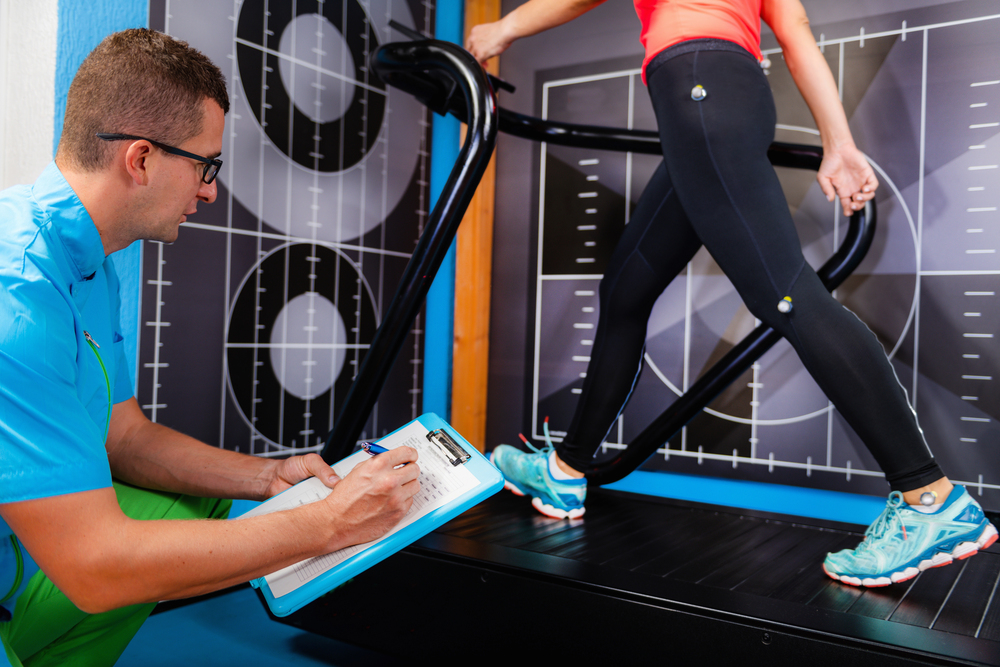
Visual gait analysis is a way to assess how a person walks by observing their movement models. In a clinical environment, this method is important because it helps health professionals to identify various conditions related to walking and plan an appropriate rehabilitation. When a person walks, his approach can reveal a lot about their overall health, especially if they have certain medical problems. For example, this type of analysis can be crucial for patients with neurological disorders or children with cerebral paralysis. Looking at how these people move, doctors can better understand their capacities and their limits (Gor-García-Fogada et al., 2016; Folle et al., 2016).
Despite its usefulness, the analysis of visual walking has certain limits. A major concern is its subjectivity. Different observers can interpret the approach of a person in various ways depending on their own experiences and their training. This variability can lead to incoherent evaluations, which can affect the accuracy of diagnostics and the effectiveness of treatment plans. For example, a physiotherapist can notice certain characteristics of the march that another could ignore. Differences in training and expertise among health professionals can further complicate issues. Consequently, what a clinician sees and notes on the approach of a patient may not correspond to the views of another clinician, which leads to potentially divergent conclusions.
Another key problem is the accuracy of visual gait analysis in relation to more advanced technological methods. Modern technology, such as motion capture systems, pressure sensors and portable devices, can provide precise measures of the movement of a person. These tools analyze the approach with a high degree of precision, capturing data that human observers could miss. For example, while a clinician can see the drink, the technology could measure the exact degree of weight shift or joint angle, offering a much clearer image of what is happening biomechanically. Research has indicated that these technological assessments often surpass visual assessments in the capture of subtle variations in the approach that can be essential for diagnosis and treatment.
In addition, the implications for the rehabilitation and prevention of injuries extend beyond the simple diagnosis. A precise evaluation by the analysis of visual walking or technological methods can guide physiotherapists in sewing rehabilitation programs. For example, understanding the specifics of a patient’s approach allows therapists to create exercise plans that deal with special weaknesses or imbalances. These adjustments can not only help recover from an injury, but also play a crucial role in prevention of future injury. If a walking model is identified early, it can be corrected in a way that decreases the risk of falls or other complications.
In summary, the analysis of visual walking is significant in a clinical environment to diagnose the conditions and rehabilitation of planning. However, its reliability and precision in relation to technological methods raise important questions. The subjectivity of visual evaluations, as well as the emerging power of technology, suggests that if visual walking analysis remains a precious tool, it must be completed by more objective measures to improve patient results., Visual gait analysis is a common method used in clinics to evaluate how people walk. Doctors usually trust eye to observe march patterns, looking for signs of issues or injuries. Although this approach can provide immediate information, it is important to understand its reliability and accuracy compared to more advanced technological methods.
Research shows that visual march analysis can be less accurate than the tools available today. For example, inertial measurement units (IMUS) are devices that can be attached to a person’s body to measure movements, including walking. Studies such as Washabaugh et al. (2017) found that these devices can consistently measure important gear parameters, such as speed and stage length, with high validity and repeatability. This means that they provide reliable results over time, making them a strong alternative to visual walking assessments.
By comparing traditional visual methods with sophisticated systems such as Microsoft Kinect and Capture Motion 3D, performance differences become clear. These technologies use cameras and sensors to capture a person’s movements in three dimensions, providing more detailed information about walking standards. A study by Pfister et al. (2014) points out that these technological approaches produce more consistent and objective data than visual analysis alone. This is crucial because consistent measurements lead to better reviews and treatment plans.
Visual gait analysis can be influenced by several factors, including the observer’s experience and bias, lighting conditions and the environment in which the analysis occurs. These variables introduce a level of subjectivity that can affect results. On the other hand, technological methods minimize these problems as they depend on data collection that does not vary from one observer to another. This objectivity is essential in clinical environments, where the precise diagnosis and the monitoring of progress are essential for effective treatment.
Although the visual analysis of the gait is certainly a valuable tool in clinical practice, only trusting it may not provide the full staff. According to Wall-of-Herran et al. (2014), this method should be complemented with quantitative measures or even replaced by them. By combining visual analysis with objective technological tools data, doctors can improve the quality of their evaluations. This holistic approach allows for better problem identification, more accurate measurement of progress, and finally a greater chance of successful rehabilitation.
In short, although visual gait analysis has its place in clinical environments, it often lacks the reliability and accuracy of technological methods. Advanced tools such as inertial measurement units, Microsoft Kinect and Vicon 3D Motion Capture, provide crucial data that can lead to better treatment results. Understanding the limitations of visual analysis helps to guide doctors to make informed decisions about patient care, injury prevention and rehabilitation strategies., The use of walking analysis is essential to improve rehabilitation and prevent injuries. Reliable walking methods help health care providers to develop effective treatment plans. Research shows that a precise analysis of walking can help diagnose various conditions and create personalized rehabilitation programs (Michelini et al., 2020; Di Biase et al., 2020). This personalization is important because each patient has unique needs according to their state and specific objectives.
For example, monitoring the way a person works can be particularly beneficial for people with movement disorders, such as Parkinson’s disease. Studies have indicated that real -time monitoring of the process can considerably improve the understanding of the evolution of symptoms over time (Del Din et al., 2016). By following the changes in a person’s walking habits, clinicians can quickly adjust treatments. These adjustments may include changes in exercises or the use of assistance devices, helping patients maintain or improve their mobility.
The use of visual and technological methods for walking allows clinicians to take a more complete image of the movement of a patient. Visual analysis often implies a subjective interpretation by a clinician, who can introduce variability. However, when completed by technological methods, such as motion capture systems or pressure sensitive soles, it leads to more precise measurements (Colyer et al., 2018). The combination of these methods can provide a complete view of the dynamics of the approach, giving therapists precious information that guide the processing.
In addition, the analysis of the approach plays an essential role in prevention of injuries. By identifying abnormal walking habits, clinicians can predict problems before becoming serious. For example, if flexible monitoring of walking data reveals that a patient exerts excessive constraint on one leg, targeted interventions can be implemented. This proactive approach not only helps the immediate treatment of patients, but also reduces the risk of future injury, promoting long-term health and well-being.
In addition, the analysis of the approach contributes to improving the results of rehabilitation strategies by allowing health care providers to measure the progress with precision. Patients often need motivation and reassurance that their hard work is bearing fruit. Using walking analysis data, therapists can show improvements in walking capacity, balance and coordination, which facilitates understanding of their recovery journey.
Overall, the integration of visual and technological methods in clinical environments leads to improving care strategies. Using a reliable walking analysis, health care providers can improve rehabilitation efforts, which has finally led to better results for patients and an increased quality of life. Therapists who use validated tools and real -time monitoring can ensure that their patients receive the most appropriate interventions adapted to their needs (Del Din et al., 2015). This double approach not only promotes healing but also allows individuals to take charge of their recovery, making the analysis of the approach a vital component of modern rehabilitation practices.
Citations:
Gor-García-Fogeda, M.D., de la Cuerda, R.C., Tejada, M.C., Alguacil-Diego, I.M. and Molina-Rueda, F., 2016. Observational gait assessments in people with neurological disorders: a systematic review. Archives of physical medicine and rehabilitation, 97(1), pp.131-140. https://www.sciencedirect.com/science/article/pii/S0003999315006504
Michelini, A., Eshraghi, A. and Andrysek, J., 2020. Two-dimensional video gait analysis: A systematic review of reliability, validity, and best practice considerations. Prosthetics and Orthotics International, 44(4), pp.245-262. https://journals.sagepub.com/doi/abs/10.1177/0309364620921290
Di Biase, L., Di Santo, A., Caminiti, M.L., De Liso, A., Shah, S.A., Ricci, L. and Di Lazzaro, V., 2020. Gait analysis in Parkinson’s disease: An overview of the most accurate markers for diagnosis and symptoms monitoring. Sensors, 20(12), p.3529. https://www.mdpi.com/1424-8220/20/12/3529
Folle, M.R., Tedesco, A.P. and Nicolini-Panisson, R.D.A., 2016. Correlation between visual gait analysis and functional aspects in cerebral palsy. Acta Ortopédica Brasileira, 24(05), pp.259-261. https://www.scielo.br/j/aob/a/TwZDW6j7wBVj6HfrdM7DTxS/?lang=en
Washabaugh, E.P., Kalyanaraman, T., Adamczyk, P.G., Claflin, E.S. and Krishnan, C., 2017. Validity and repeatability of inertial measurement units for measuring gait parameters. Gait & posture, 55, pp.87-93. https://www.sciencedirect.com/science/article/pii/S0966636217301261
Pfister, A., West, A.M., Bronner, S. and Noah, J.A., 2014. Comparative abilities of Microsoft Kinect and Vicon 3D motion capture for gait analysis. Journal of medical engineering & technology, 38(5), pp.274-280. https://www.tandfonline.com/doi/abs/10.3109/03091902.2014.909540
Del Din, S., Godfrey, A., Mazzà, C., Lord, S. and Rochester, L., 2016. Free‐living monitoring of Parkinson’s disease: Lessons from the field. Movement Disorders, 31(9), pp.1293-1313. https://movementdisorders.onlinelibrary.wiley.com/doi/abs/10.1002/mds.26718
Del Din, S., Godfrey, A. and Rochester, L., 2015. Validation of an accelerometer to quantify a comprehensive battery of gait characteristics in healthy older adults and Parkinson’s disease: toward clinical and at home use. IEEE journal of biomedical and health informatics, 20(3), pp.838-847. https://ieeexplore.ieee.org/abstract/document/7078919/
Muro-De-La-Herran, A., Garcia-Zapirain, B. and Mendez-Zorrilla, A., 2014. Gait analysis methods: An overview of wearable and non-wearable systems, highlighting clinical applications. Sensors, 14(2), pp.3362-3394. https://www.mdpi.com/1424-8220/14/2/3362
Colyer, S.L., Evans, M., Cosker, D.P. and Salo, A.I., 2018. A review of the evolution of vision-based motion analysis and the integration of advanced computer vision methods towards developing a markerless system. Sports medicine-open, 4(1), p.24. https://link.springer.com/article/10.1186/s40798-018-0139-y

University lecturer, runner, cynic, researcher, skeptic, forum admin, woo basher, clinician, rabble-rouser, blogger, dad.