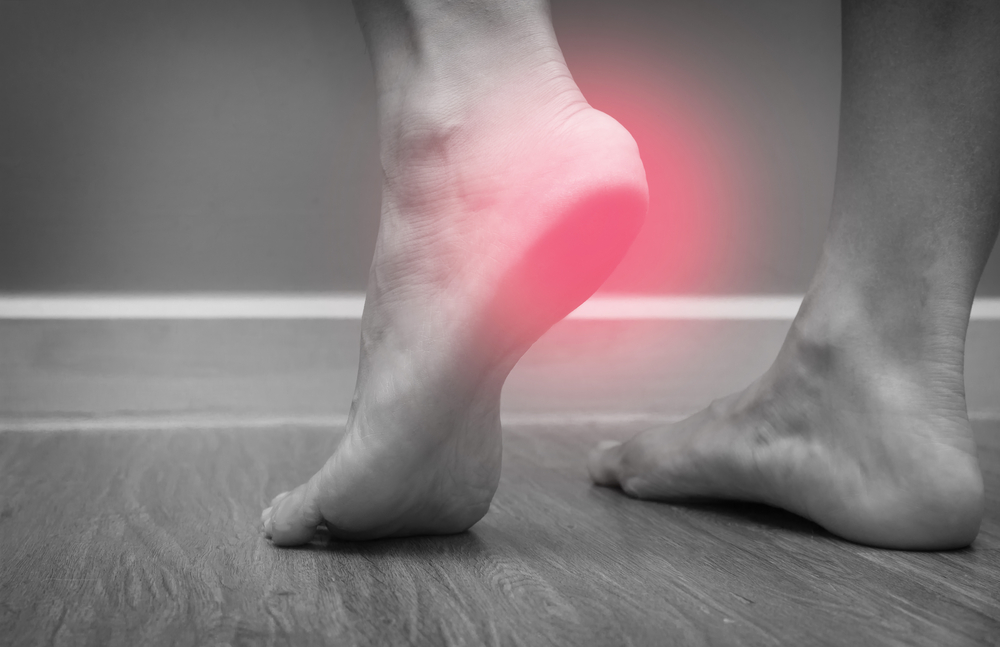
Cuboid syndrome is a condition that can significantly impact athletic performance, especially in sports that require running and jumping. It occurs when the cuboid bone, located in the midfoot, becomes misaligned or injured. This misalignment can lead to pain and dysfunction, affecting an athlete’s ability to perform at their best. Understanding the causes, diagnosis, and treatment options for cuboid syndrome, as well as its broader implications for foot biomechanics, is essential for those involved in athletics.
Causes of cuboid syndrome often link to injuries, typically resulting from trauma to the midfoot or ankle. A common cause is a lateral ankle sprain, which can destabilize the cuboid bone (Simpson, 2024). Athletes involved in high-impact sports are particularly at risk. When the ankle rolls outward, it may create a range of issues, including sprains to surrounding ligaments, leading to the disruption of the cuboid’s position (Traister and Simons, 2014). Overuse during repetitive movements, such as those seen in runners, can also contribute to cuboid dysfunction (Dann et al., 2015). As such, understanding these risk factors is vital for preventing the condition.
Diagnosing cuboid syndrome can be challenging. Medical professionals often rely on a combination of patient history, physical examination, and imaging techniques. During the physical exam, a healthcare provider looks for tenderness around the cuboid, swelling, and pain during movement (Lewson et al., 2021). Imaging techniques such as X-rays, MRI, and CT scans can help visualize any structural problems (Angoules et al., 2019). The clinical complexity and similarity to other foot injuries can make the diagnosis less straightforward, underscoring the need for a careful and thorough examination.
Treatment options for cuboid syndrome vary based on the severity of the condition. Initial treatment focuses on conservative methods, including rest, ice, compression, and elevation (RICE) (Sullivan et al., 2015). Physical therapy is also crucial, as it helps strengthen the surrounding muscles and improve flexibility, addressing the biomechanical issues that may contribute to the pain (Pountos et al., 2018). In some severe cases where conservative treatment fails, surgical intervention may be required. For example, a novel surgical technique known as the cuboid sling has recently emerged as an effective treatment option, providing athletes with a possible path to recovery (Lewson et al., 2021).
The implications of cuboid syndrome extend beyond just discomfort; they can hinder athletic performance. Athletes suffering from this condition may experience difficulty in running, jumping, and even walking (Tu and Magoun, 2020). When the cuboid is dysfunctional, it can alter the entire foot’s biomechanics. Proper foot biomechanics are vital for efficient movement. A misaligned cuboid can lead to compensatory mechanisms in adjacent joints, resulting in altered gait patterns and increased stress on the foot and ankle (Anderson et al., 2022). This increased stress can lead to other injuries if not appropriately managed, thereby impacting long-term career performance.
Cuboid syndrome also influences overall foot biomechanics. The cuboid bone plays a key role in transferring forces between the midfoot and forefoot. If the cuboid is immobile or misaligned, the efficiency of force transfer becomes compromised. This could lead to overuse injuries in the legs, knees, and hips due to altered load distribution (Traister and Simons, 2014). For athletes, this is particularly problematic, since efficient biomechanics are crucial for peak performance and injury prevention.
Moreover, research has demonstrated that maintaining a healthy and well-functioning cuboid is essential for overall athletic efficacy (Pountos et al., 2018). Understanding the mechanics behind foot movement enables athletes to tailor their training regimens and routines, thereby minimizing their risk of developing cuboid syndrome. Injury prevention programs focusing on strengthening the muscles that stabilize the midfoot, including those around the cuboid, are also invaluable (Dann et al., 2015).
Cuboid syndrome is a significant concern for athletes, as it can lead to pain and hinder performance. With its various causes, including trauma and overuse, proper diagnosis and treatment options are vital for recovery. The implications of cuboid syndrome not only affect the foot itself but also the athlete’s overall biomechanics, leading to potential long-term consequences if not addressed. By prioritizing education on the condition and its management, athletes can better safeguard their health and performance. Furthermore, ongoing research into cuboid syndromes is likely to enhance our understanding and treatment approaches, allowing athletes to train and compete more effectively (Traister and Simons, 2014; Simpson, 2024).
Citations:
Angoules, A.G., Angoules, N.A., Georgoudis, M. and Kapetanakis, S., 2019. Update on diagnosis and management of cuboid fractures. World journal of orthopedics, 10(2), p.71. https://pmc.ncbi.nlm.nih.gov/articles/PMC6379735/
Lewson, E.B., Pulsifer, M.S.E. and Mallette, J.P., 2021. Cuboid sling: A novel surgical repair of cuboid syndrome and literature review. Foot & Ankle Surgery: Techniques, Reports & Cases, 1(4), p.100108. https://www.sciencedirect.com/science/article/pii/S2667396721001099
Anderson, D., Woods, B., Abubakar, T., Koontz, C., Li, N., Hasoon, J., Viswanath, O., Kaye, A.D. and Urits, I., 2022. A comprehensive review of cubital tunnel syndrome. Orthopedic reviews, 14(3), p.38239. https://pmc.ncbi.nlm.nih.gov/articles/PMC9476617/
Dann, C.L., Mazerolle, S.M., Aerni, G., Hubbard, J. and Miller, R.S., 2015. Examining the Impact of a Dorsal Calcaneocuboid Sprain on Cuboid Syndrome and Exploring Individual Treatment: A Case Review. Athletic Training & Sports Health Care, 7(2), pp.76-80. https://journals.healio.com/doi/abs/10.3928/19425864-20150216-04
Tu, J. and Magoun, M.A., A Case of Cuboid Syndrome Managed from a Podiatric and Osteopathic Perspective. Extremitas Journal of Lower Limb Medicine, p.73. https://www.researchgate.net/profile/Andre-Aabedi-2/publication/390460476_Preoperative_and_Postoperative_Considerations_of_Micro-_arteriovenous_Fistulas_in_Patients_with_Lower_Limb_Lymphedema/links/67eea75de8041142a1612173/Preoperative-and-Postoperative-Considerations-of-Micro-arteriovenous-Fistulas-in-Patients-with-Lower-Limb-Lymphedema.pdf#page=83
Simpson, H., 2024. What Is Cuboid Syndrome Following Traumatic Lateral Ankle Sprain, and How Should It Be Treated?. In Quick Questions in Ankle Sprains (pp. 123-129). Routledge. https://www.taylorfrancis.com/chapters/edit/10.4324/9781003526117-27/cuboid-syndrome-following-traumatic-lateral-ankle-sprain-treated-helene-simpson
Torrez, T.W., Kothari, E.A., Andrews, N., Seidenstein, A.H., Strom, S., McGwin Jr, G., Gilbert, S.R., Shah, A., Doyle, J.S. and Conklin, M.J., 2023. Analysis of risk factors for nonunion in pediatric lateral column lengthening. Journal of Pediatric Orthopaedics B, 32(5), pp.422-427. https://journals.lww.com/jpo-b/fulltext/2023/09000/analysis_of_risk_factors_for_nonunion_in_pediatric.3.aspx
Traister, E. and Simons, S., 2014. Diagnostic considerations of lateral column foot pain in athletes. Current Sports Medicine Reports, 13(6), pp.370-376. https://journals.lww.com/acsm-csmr/fulltext/2014/11000/Diagnostic_Considerations_of_Lateral_Column_Foot.8.aspx?uuid=c43f8b92-9b6d-4c09-b642-3b259e03dbc0
Sullivan, M., de Silva, V., Panti, J.P.L. and Linklater, J., 2015. Operative technique for cuboid instability in an elite gymnast: case report. Foot & Ankle International, 36(5), pp.598-602. https://journals.sagepub.com/doi/abs/10.1177/1071100714560585
Pountos, I., Panteli, M. and Giannoudis, P.V., 2018. Cuboid injuries. Indian journal of orthopaedics, 52(3), pp.297-303. https://link.springer.com/article/10.4103/ortho.IJOrtho_610_17

University lecturer, runner, cynic, researcher, skeptic, forum admin, woo basher, clinician, rabble-rouser, blogger, dad.

