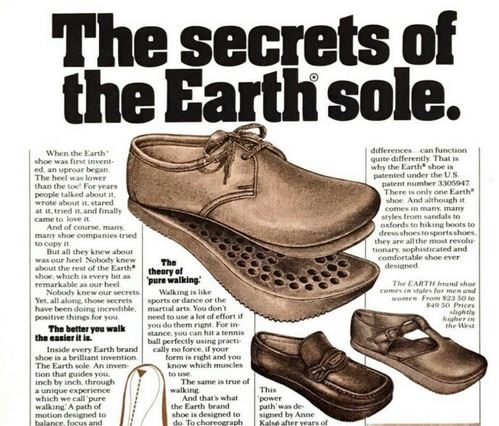
Earth Shoes have a distinctive and important history in the world of footwear. Founded in the early 1970s by Anne Kalso, a Danish yoga instructor, Earth Shoes were designed with a unique concept in mind. The primary goal was to create footwear that would promote a more natural alignment of the body, especially the feet. The shoes featured a heel that was lower than the toe, a design often referred to as a “negative heel” design. This innovative design aimed to make walking more comfortable and aligned with the way our bodies naturally move (Menz and Bonanno, 2021).
The design philosophy behind Earth Shoes was not just about style but also focused on health benefits. Kalso believed that traditional footwear caused more harm than good by encouraging unnatural foot positions. By creating shoes that mimicked the way people walked barefoot, Kalso aimed to improve posture, reduce strain on the back, and enhance overall body comfort. This concept resonated with many consumers who were beginning to seek more natural and health-conscious ways to live their lives (Tedeschi et al., 2024).
In the years following their introduction, Earth Shoes gained popularity, particularly among those interested in holistic health and alternative lifestyles. As more people became aware of the detrimental effects of conventional footwear, the demand for shoes that supported natural foot movement intensified. The unique approach of Earth Shoes not only catered to this demand but also inspired other brands to rethink their own footwear designs. As a result, Earth Shoes played a significant role in the movement towards more ergonomic and health-oriented footwear (Aboutorabi et al., 2016).
A key health benefit of Earth Shoes lies in their design, which promotes better posture and alignment. Traditional shoes often force the body into an unnatural stance, which can lead to various health issues such as joint pain and back problems. The negative heel design of Earth Shoes encourages a more even distribution of body weight, helping to alleviate pressure on specific joints, particularly in the knees and hips. Research suggests that shoes that support proper alignment can prevent podiatric issues and enhance overall well-being (Tedeschi et al., 2024).
Furthermore, Earth Shoes have been linked to better balance, especially for older adults. A systematic review of footwear characteristics showed that shoes designed to support natural foot movement contribute significantly to balance, which is crucial for preventing falls in aging populations (Aboutorabi et al., 2016). This finding highlights the importance of thoughtful footwear design, especially as more people strive to maintain an active lifestyle well into their later years.
Many consumers also appreciate the aesthetics of Earth Shoes. While comfort and health are core to the brand, the shoes are also designed to be stylish and suitable for a variety of occasions. This versatility means that consumers can wear Earth Shoes for both casual and formal events, which appeals to a wide range of customers. The blend of style and health benefits has made Earth Shoes an attractive option for many individuals looking to make better lifestyle choices, aligning with a growing trend towards conscious consumerism (Song et al., 2022).
Another important aspect of Earth Shoes is their commitment to eco-friendliness. The brand emphasizes sustainability in its manufacturing processes and the selection of materials. As consumers become more aware of their environmental impact, many are drawn to brands that prioritize sustainability. Earth Shoes have positioned themselves well in this regard, promoting a lifestyle that values both personal health and planetary well-being (Harvey et al., 2016).
As the conversation around health, wellness, and sustainability continues to grow, brands like Earth Shoes are likely to remain influential in shaping consumer preferences. The idea that footwear should contribute positively to one’s health rather than detract from it has gained traction. As a result, more brands are adopting similar design philosophies, pushing the boundaries of innovation in footwear (Menz and Bonanno, 2021).
Moreover, advances in technology and footwear design have opened new doors for brands focused on innovation. Earth Shoes were pioneers in employing concepts that are now becoming mainstream, such as cushioning materials that offer support while being lightweight and flexible. The use of breathable fabrics and carefully constructed soles that adapt to the foot’s natural movements has since been embraced by many in the industry (Song et al., 2022).
Earth Shoes represent a significant shift in the footwear industry, emphasizing the importance of comfort, health, and sustainability. Their unique design philosophy has not only alleviated various foot-related issues but also inspired a wave of innovation in footwear design. As lifestyle choices continue to evolve with a focus on health and environmental consciousness, Earth Shoes have cemented their role in driving consumer trends towards healthier, more thoughtful living. This legacy underlines the importance of considering how our choices in everyday items, such as footwear, can significantly impact our well-being and the health of our planet. Retailers and consumers alike are increasingly acknowledging the importance of selecting shoes that prioritize health so that we can promote a lifestyle that is not just about looking good, but feeling good too (Harvey et al., 2016).
Citations:
Menz, H.B. and Bonanno, D.R., 2021. Footwear comfort: a systematic search and narrative synthesis of the literature. Journal of Foot and Ankle Research, 14(1), p.63. https://link.springer.com/article/10.1186/s13047-021-00500-9
Tedeschi, R., Giorgi, F. and Donati, D., 2024. Footwear and foot health: unveiling the role of proper shoe fit in preventing podiatric issues and enhancing Well-Being. Applied Sciences, 14(21), p.9938. https://www.mdpi.com/2076-3417/14/21/9938
Aboutorabi, A., Bahramizadeh, M., Arazpour, M., Fadayevatan, R., Farahmand, F., Curran, S. and Hutchins, S.W., 2016. A systematic review of the effect of foot orthoses and shoe characteristics on balance in healthy older subjects. Prosthetics and orthotics international, 40(2), pp.170-181. https://journals.sagepub.com/doi/abs/10.1177/0309364615588342
Song, Y., Shao, E., Bíró, I., Baker, J.S. and Gu, Y., 2022. Finite element modelling for footwear design and evaluation: A systematic scoping review. Heliyon, 8(10). https://www.cell.com/heliyon/fulltext/S2405-8440(22)02228-9
Harvey, M.L., Oskins, J.D., McCarter, K.N. and Baker, J.R., 2016. Direct earth contact: Barefootedness and nature connection. Ecopsychology, 8(2), pp.96-106. https://www.liebertpub.com/doi/abs/10.1089/eco.2015.0075

University lecturer, runner, cynic, researcher, skeptic, forum admin, woo basher, clinician, rabble-rouser, blogger, dad.
