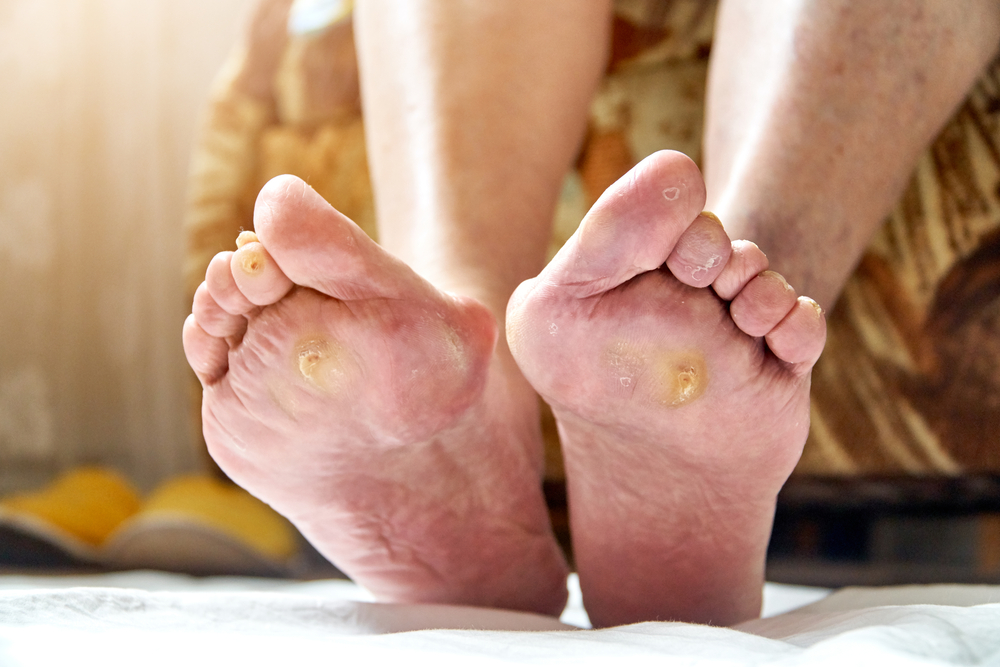
Common foot conditions include ingrown toenails which are those nails which dig into the skin alongside them. Poor foot mechanics can lead to foot pain and discomfort and potentially more serious foot complications if not addressed. They can severely limit your ability to move around and cause considerable pain. Ingrowing toenails are not trivial problems.
Ingrown toenails are caused by a variety of factors. Nail biting frequently results from poorly cut fingernails. Incorrect cutting can sometimes result in nails growing into the skin, known as ingrown nails. This may be brought on by the nail edges being rounded instead of smooth. If your nails are being cut too short this can also result in your nails growing into the skin. In people who wear tight footwear the pressure on the toes can push the nails into the skin, leading to an ingrown toenail. Factors include a person’s genetic make-up. Certain people may be more prone to onycholysis as they have naturally thick nails. This is according to Ozdemir Cetinkaya et al. (2018) and Iyer (2019). 2024).
For those unfortunate enough to have developed ingrowing toenails, their symptoms can be extremely painful. Discomfort may become apparent if the toe is pressed. Inflammation of the skin around the nail area can also manifest as redness or swelling. In the research carried out by Nandgaye et al. it has been observed that 2019) and Wollina et al. ( The pain and discomfort caused by conditions such as lumbar spinal stenosis (2016) can lead to difficulties with walking and other daily activities. Ingrown toenails can make daily routine actions like putting on shoes as well as standing up for some time difficult.
Ingrown toenails are more than just a minor nuisance – they can severely restrict daily life. Many people develop a fear of doing things which might provoke their condition, such as socialising or exercising. It could result in reduced mobility which has a negative effect on an individual’s overall well-being. Having an ingrown toenail not only causes pain but it can also lead to irritability and anxiety. This further negatively impacts on life quality. To avoid discomfort or restriction, it is crucial to comprehend the causes and indicators of ingrown toenails which can contribute to foot health issues. Ingrown toenail treatments range from basic home remedies to major surgery and may involve soaking, nail-clipping, antibiotics and in extreme cases, amputation. Home treatments provide relief for many people as stated by Bryant and Knox in their 2015 study. Treatment may involve soaking the affected foot in warm water or using painkillers bought over the counter. Alternatively, the inflamed area of the toe nail should be carefully moved away from the skin. Cotton or dental floss can be used to keep the nail in place. Keeping the wound area free from moisture and clean will help prevent infection.
If home treatments are not effective, or if the ingrown nail is severe, professional medical assistance is required. Medical treatments as described by Exley et al. (2023) may include partial or the complete removal of the nail. A common procedure is the removal of a part of the toe and this typically takes place in a doctor’s surgery. In some cases it may be required to anaesthetise the toe prior to it being removed. Application of a caustic substance can stop nail growth, but it may result in scarring. While these treatments can seem intimidating, they are essential in reducing the pain and stopping further complications such as infection.
Maintaining healthy feet is also dependent on preventing ingrown toenails. Good nail care is crucial. The clipping should be carried out straight across the nail with no curves. This prevents the sharp edges from digging into the skin. While footwear is also important, selecting the appropriate footwear is vital. Wearing shoes which are too tight causes strain on the toe area which can cause ingrown toenails. Comfortable footwear, such as those allowing for the toes to spread, is recommended by Lee and Lipner (2022). Additionally, keeping your feet well is crucial; wearing clean socks and making sure your feet stay dry can help to reduce the risk of fungal infections or excessive sweating which can be triggers for the condition.
It has been suggested by Exley et al. (2024) that, particularly between the toes, we should make sure that our feet are washed regularly and are thoroughly dried. Inspecting feet regularly may help you identify any potential problems at an early stage, allowing early intervention before the problems are more complex.
While treating an ingrown toenail provides short-term relief, its benefits can be seen in foot health and lifestyle over the long term. Ingrown toenails can cause considerable distress to the person suffering from this condition, to an extent where the pain is so severe that it interferes with everyday routines. Following recent research by Arica et al., Individuals with diabetes or those who are athletes may face additional obstacles when it comes to foot care. Individuals who have a history of conditions like diabetes or poor circulation may also be more likely to get ingrown toenails. Furthermore factors which could affect this condition are a person’s lifestyle. If you can take care of your foot problems early on, you will feel more comfortable and have better overall health.
Citations:
Nandgaye, D.C., Gotefode, S.N. and Moharkar, D.W., The Causes, Diagnosis and Treatment of Nail Disorder. https://www.researchgate.net/profile/Dhammadip-Nandgaye/publication/387428654_The_Causes_Diagnosis_and_Treatment_of_Nail_Disorder/links/676d75d0e74ca64e1f2dc141/The-Causes-Diagnosis-and-Treatment-of-Nail-Disorder.pdf
Mayeaux Jr, E.J., Carter, C. and Murphy, T.E., 2019. Ingrown toenail management. American family physician, 100(3), pp.158-164. https://www.aafp.org/pubs/afp/issues/2019/0801/p158.html
Iyer, P.K., 2019. A Survey Study on Causes, Treatment and Prevention of Onychocryptosis. Indian Journal of Public Health Research & Development, 10(8). https://search.ebscohost.com/login.aspx?direct=true&profile=ehost&scope=site&authtype=crawler&jrnl=09760245&AN=139753284&h=UIVbcEqKSIp7plWpjcxdO4yKItNA%2BG0MP%2BFvqFRGQ9zKJnNfv1l9437HjzhBsE4FtzP3QEZKngU3%2F2bqsxEADg%3D%3D&crl=c
Ozdemir Cetinkaya, P., Özkesici Kurt, B., Aksu, A., Aydin, S.N., Kaya, H.E. and Altunay, I.K., 2024. Evaluation of predisposing factors in patients with ingrown toenails: a prospective, case-control study. Archives of Dermatological Research, 317(1), p.23. https://link.springer.com/article/10.1007/s00403-024-03510-2
Wollina, U., Nenoff, P., Haroske, G. and Haenssle, H.A., 2016. The diagnosis and treatment of nail disorders. Deutsches Ärzteblatt International, 113(29-30), p.509. https://pmc.ncbi.nlm.nih.gov/articles/PMC5527843/
Bryant, A. and Knox, A., 2015. Ingrown toenails: the role of the GP. Australian Family Physician, 44(3), pp.102-105. https://search.informit.org/doi/abs/10.3316/informit.977011031092663
Exley, V., Jones, K., O’Carroll, G., Watson, J. and Backhouse, M., 2023. A systematic review and meta‐analysis of randomised controlled trials on surgical treatments for ingrown toenails part I: recurrence and relief of symptoms. Journal of Foot and Ankle Research, 16(1), p.35. https://onlinelibrary.wiley.com/doi/abs/10.1186/s13047-023-00631-1
Lee, D.K. and Lipner, S.R., 2022. Optimal diagnosis and management of common nail disorders. Annals of Medicine, 54(1), pp.694-712. https://www.tandfonline.com/doi/abs/10.1080/07853890.2022.2044511
Exley, V., Jones, K., Watson, J. and Backhouse, M., 2024. A survey of the treatment and management of ingrown toenails by UK podiatrists: A cross‐sectional survey. Journal of Foot and Ankle Research, 17(2), p.e12017. https://onlinelibrary.wiley.com/doi/abs/10.1002/jfa2.12017
Arica, I.E., Bostanci, S., Kocyigit, P. and Arica, D.A., 2019. Clinical and sociodemographic characteristics of patients with ingrown nails. Journal of the American Podiatric Medical Association, 109(3), pp.201-206. https://japmaonline.org/view/journals/apms/109/3/17-023.xml

University lecturer, runner, cynic, researcher, skeptic, forum admin, woo basher, clinician, rabble-rouser, blogger, dad.