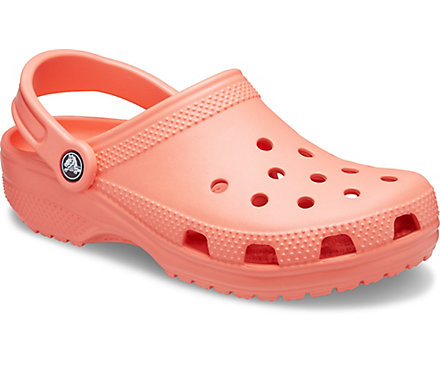
Crocs footwear represents a unique case in the world of fashion, blending comfort and style in a way few other brands have achieved. Since their introduction in the early 2000s, Crocs have evolved significantly in design and social perception. Their journey highlights a deeper cultural significance, with ties to functionality, individual expression, and changing attitudes towards fashion. This essay explores the design evolution, cultural significance, and market impact of Crocs, examining how they have risen to prominence while balancing comfort and style.
The design of Crocs, initially launched as a boating shoe made from resin material, quickly gained popularity due to its unique features. The original Crosslite material is not only lightweight but also provides excellent cushioning. This design focused heavily on comfort, leading to a strong following among various groups, from healthcare workers to outdoor enthusiasts. Crocs have been appreciated for their practicality; they are easy to clean, quick to dry, and offer good support for prolonged wear. As noted by Xu (2025), the brand’s marketing strategies have consistently highlighted these practical attributes, making them appealing for everyday use.
Over the years, Crocs has expanded its design palette. Initially available in limited colors, the brand has responded to market demands by introducing a vast array of colors and patterns. This evolution reflects broader trends in fashion where customization and personal expression are crucial. Findlay et al. (2025) highlight how Crocs have adapted to include collaborations with high-profile designers and celebrities, pushing the boundaries of what the brand can represent: from a simple comfort shoe to a fashion statement.
Culturally, Crocs embody a shift in how society perceives footwear. Traditionally, comfort was often seen as an enemy of style. However, in recent years, the lines have blurred considerably. As societal values shift towards comfort, particularly post-pandemic, people are no longer willing to sacrifice comfort for style. The concept of “ugly fashion” has emerged, creating a space where Crocs fit perfectly. Fashion influencers and celebrities have been seen wearing Crocs, leading to a resurgence in their popularity (Peng, 2023). The once-stigmatized footwear is now embraced, highlighting an essential cultural shift towards inclusivity in fashion choices.
In addition to comfort and fashion perceptions, the environmental angle of Crocs is a significant aspect of its cultural relevance. As more consumers consider sustainability in their purchasing decisions, Crocs has responded by emphasizing eco-friendly practices. They have committed to making their production processes more sustainable and sourcing materials responsibly. This move aligns with growing global concerns about climate change and environmental degradation. CUI et al. (2024) discussed how contemporary fashion must adapt to these sustainability demands, and Crocs is an example of a brand making strides in this direction.
The market impact of Crocs footwear cannot be overstated. Their unusual rise in popularity has shifted consumer expectations and behavior in the footwear industry. The brand has seen impressive sales growth, which speaks to its successful adaptation and marketing strategies. According to Pan (2025), Crocs has strategically positioned itself not just as a footwear brand but as a lifestyle choice, integrating itself into various consumer demographics, from children to adults seeking casual footwear options.
The broad consumer acceptance has allowed Crocs to thrive even amid economic fluctuations. As noted by Peng (2023), market analysts have observed trends indicating that Crocs outperform many competitors, especially during times of uncertainty. People favor affordable and comfortable options, and Crocs fits this need perfectly, leading to a loyal customer base.
In examining the balance between comfort and style, it is essential to analyze the changing perceptions surrounding these attributes in modern fashion. While some critics still label Crocs as unfashionable, this designation has transformed. The brand’s collaborations have introduced designs that blend creative aesthetics with the practicality of Crocs’ original vision. Xu’s (2025) analysis indicates that the global fashion landscape is increasingly accepting what was once seen as practical footwear. The influence of social media has played a role as well, as consumers share their Crocs outfits, showcasing how comfort can coexist harmoniously with personal style.
Moreover, the rise of e-commerce has provided Crocs a significant platform for growth. With online shopping’s increased popularity, the brand has capitalized on digital marketing to reach broader audiences. The ability to showcase diverse styles and collaborations online has kept the brand fresh and relevant. Further, Findlay et al. (2025) suggest that the agility with which Crocs has adapted to digital sales trends has allowed it to capture the interest of younger consumers, who often use social media to share trends and styles.
Crocs footwear stands as an exemplary brand that intertwines comfort with evolving fashion norms. Its rise is not merely a trend but a reflection of broader societal changes in perceptions towards footwear and style. From its original design focused on comfort, Crocs has successfully navigated the complex fashion landscape, balancing market demands and cultural significance. Through strategic marketing, innovative designs, and an emphasis on sustainability, Crocs has established itself as a key player in modern footwear, illustrating that comfort can pair well with style in today’s fashion world. As fashion continues to evolve, Crocs is likely to remain at the forefront, challenging traditional notions of what footwear should be, and further bridging the gap between style and comfort.
Citations:
Pan, D., 2025. Strategic Assessment of Crocs, Inc.: Navigating Market Challenges and Leveraging Growth Opportunities. Inc.: Navigating Market Challenges and Leveraging Growth Opportunities (January 10, 2025). https://papers.ssrn.com/sol3/papers.cfm?abstract_id=5125201
Peng, Y., 2023. Market Fluctuations and the Crocs’ Resurgence. Advances in Economics, Management and Political Sciences, 49, pp.319-323. https://direct.ewa.pub/proceedings/aemps/article/view/7061
Findlay, A., Ondracek, J., Peterson, K., Saeed, M. and Meixuan, W., 2025. Managing Corporate Resources: A Strategic Analysis of Crocs, Inc. Delhi Business Review, 26(1), pp.1-13. https://www.researchgate.net/profile/M-Saeed-2/publication/393600030_Managing_Corporate_Resources_A_Strategic_Analysis_of_Crocs_Inc/links/6870c7966e247f362b18a3af/Managing-Corporate-Resources-A-Strategic-Analysis-of-Crocs-Inc.pdf
Xu, W., 2025. Research on Crocs Brand Marketing Strategy. Finance & Economics, 1(3). https://lseee.net/index.php/fe/article/view/239
CUI, T.Z., RAJI, R.K., HAN, J.L. and Yuan, C.H.E.N., 2024. REVIEW OF AVANT-GARDE CONCEPT IN FOOTWEAR RESEARCH AND DESIGN AND APPLICATION TRENDS. Leather & Footwear Journal/Revista de Pielarie Incaltaminte, 24(2). https://www.revistapielarieincaltaminte.ro/revistapielarieincaltaminteresurse/en/fisiere/full/vol24-nr2/article4_vol24_issue2.pdf

University lecturer, runner, cynic, researcher, skeptic, forum admin, woo basher, clinician, rabble-rouser, blogger, dad.