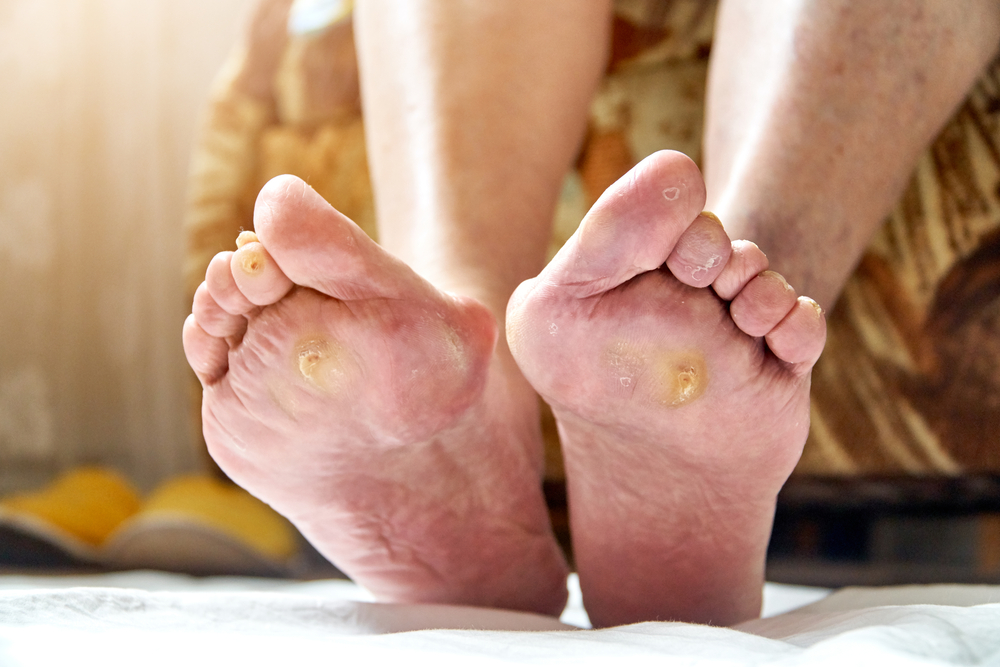
Fungal nail infections are increasingly treated with laser light, offering a new path beyond older methods. Since older options bring discomfort and last months or more, many now turn toward heat-based devices that work faster and feel less harsh. These handheld systems skip needles while breaking down germs beneath the surface – quietly changing how we manage long-standing problems.
Looking at past studies, laser therapy’s results are discussed in several thorough analyses. Take Bristow’s work from 2014 along with Ma et al.’s findings in 2019 – they show that benefits appear differently across cases, yet some individuals notice clear gains. Looking at these findings, laser treatment could help people dealing with onychomycosis. Instead of just removing the infected nail, it aims to destroy fungal life underneath. Because light energy travels deep into hard tissues, reaching hidden areas beneath the surface becomes possible. Reports show results in as many as 80 out of every 100 cases treated. That kind of response may shift how doctors approach this stubborn condition altogether.
One kind of laser system tackles onychomycosis – this deepens earlier talks on how well lasers work. Not long ago, Francuzik and team looked at different setups, like Nd:YAG and CO2 models, each tackling the condition in its own way. How fast people start feeling better depends directly on which type lights up the nail. Some finish faster than others, simply because they interact with skin and fungus distinctively. Patient outcomes shift depending on which laser gets picked, say Bhatta and team in 2014. Recovery speed, how comfortable someone feels, even their final opinion – all change. So doctors must match treatment tools closely to personal health situations. When that match happens, results tend to improve without extra effort.
It’s clear people want quick fixes when possible, given how much daily life values ease. Not every remedy moves fast – some like antifungal pills take weeks, even years, with risks like damaged livers or stomach issues. On the flip side, laser sessions usually wrap up after only a few visits. Most feel little pain while they’re done. What stands out so clearly now pushes people toward laser treatments when dealing with nail infections. It has become a path many choose to follow.
Still, even though laser therapy looks good and works well in tests, it might not help all people equally. A few folks could react less strongly to laser light, while others might see the problem come back later – making people wonder if it really lasts. Because of that, doctors need to think carefully about how much better lasers are compared to older treatments, once real-world constraints come into play. What happens after treatment matters just as much – going over what patients need to do helps keep results steady over time.
When studies change, what works for laser skin care in toe fungus matters most. Since people often want fixes without long waits or harsh procedures, options like laser shine when matching today’s medical standards. Evidence building up on these tools and their possible perks suggests a quiet revolution – one worth watching closely by those handling treatment decisions. Fungal nail infections may respond to laser therapy. The method works by passing light through thick layers, reaching hidden germ spots close to the base. Since it skips surgical cuts, users tend to pick it over pills taken daily for months. Avoiding pills means fewer possible side effects, which some people find appealing. Looking at work like Zhang and team’s 2022 paper, along with Yeung’s group from 2019, shows how using laser treatment alongside cream antifungals might lead to stronger outcomes. Because light energy boosts delivery of active ingredients, their reach improves, which enhances destruction of fungal cells.
What stands out is how quickly laser treatments finish – usually under five minutes. Speed isn’t the only win; patients gain extra time since recovery needs barely any attention. Studies now show these sessions might clear entire nails more often than older methods do.
Still, laser therapy isn’t perfect. Success doesn’t always come evenly. Some people notice real changes, yet many don’t react much at all. What works sometimes does not always follow a clear pattern. Gupta and Versteeg found things in 2017 only to see Ledon and team confirm differently just years before. The severity of an infection might shape results more than expected. Laser choice plays a role too, yet neither alone explains outcomes. Promises made by treatment may collapse when real effects appear. People looking for certainty often miss these subtleties.
One thing people often think about is how much laser treatments cost. Usually, these procedures are pricier than using standard antifungals or other methods. Higher prices might make certain individuals step back, particularly since doing several rounds is often needed to get the best results. Even when parts of laser treatment are covered by insurance, paying what remains might still feel heavy for quite a few people, making it harder to get the care they need.
Looking back at how patients do, one thing matters most – how satisfied they feel after care. Studies from Meretsky and team in 2024, along with work by Wiznia’s group Results from 2017 show people feel better after laser therapy more often than after standard meds like gels or pills for fungus. Faster improvements could play a role, along with the fact that lasers need no cuts. Still, problems coming back are something doctors keep close attention on. Even if laser therapy removes fungal growth well, chances remain that the issue could return like after ordinary methods.
Still, laser treatment brings some benefits – like stronger results when used alongside creams for fungus. Yet problems like uneven success, high prices, and new growth coming back need real attention. Over time, as studies unfold, knowing what drives them might change how doctors approach care. That clarity may also help people facing nail fungus make clearer choices.
Citations:
Gupta, A.K. and Versteeg, S.G., 2017. A critical review of improvement rates for laser therapy used to treat toenail onychomycosis. Journal of the European Academy of Dermatology and Venereology, 31(7), pp.1111-1118. https://onlinelibrary.wiley.com/doi/abs/10.1111/jdv.14212
Bristow, I.R., 2014. The effectiveness of lasers in the treatment of onychomycosis: a systematic review. Journal of Foot and Ankle Research, 7(1), p.34. https://link.springer.com/article/10.1186/1757-1146-7-34
Francuzik, W., Fritz, K. and Salavastru, C., 2016. Laser therapies for onychomycosis–critical evaluation of methods and effectiveness. Journal of the European Academy of Dermatology and Venereology, 30(6), pp.936-942. https://onlinelibrary.wiley.com/doi/abs/10.1111/jdv.13593
Bhatta, A.K., Huang, X., Keyal, U. and Zhao, J.J., 2014. Laser treatment for onychomycosis: a review. Mycoses, 57(12), pp.734-740. https://onlinelibrary.wiley.com/doi/abs/10.1111/myc.12225
Ma, W., Si, C., Carrero, L.M.K., Liu, H.F., Yin, X.F., Liu, J., Xu, Y. and Zhou, B., 2019. Laser treatment for onychomycosis: a systematic review and meta-analysis. Medicine, 98(48), p.e17948. https://journals.lww.com/md-journal/FullText/2019/11290/Laser_treatment_for_onychomycosis__A_systematic.11.aspx
Zhang, J., Lin, P., Li, J., Guo, C., Zhai, J. and Zhang, Y., 2022. Efficacy of laser therapy combined with topical antifungal agents for onychomycosis: a systematic review and meta-analysis of randomised controlled trials. Lasers in Medical Science, 37(6), pp.2557-2569. https://link.springer.com/article/10.1007/s10103-022-03561-9
Yeung, K., Ortner, V.K., Martinussen, T., Paasch, U. and Haedersdal, M., 2019. Efficacy of laser treatment for onychomycotic nails: a systematic review and meta-analysis of prospective clinical trials. Lasers in medical science, 34(8), pp.1513-1525. https://link.springer.com/article/10.1007/s10103-019-02802-8
Meretsky, C.R., Friday, B.L. and Schiuma, A.T., 2024. Efficacy of laser therapy in comparison with other methods for the treatment of onychomycosis: A systematic review and meta-analysis. Cureus, 16(5). https://www.cureus.com/articles/250507-efficacy-of-laser-therapy-in-comparison-with-other-methods-for-the-treatment-of-onychomycosis-a-systematic-review-and-meta-analysis.pdf
Ledon, J.A., Savas, J., Franca, K., Chacon, A. and Nouri, K., 2014. Laser and light therapy for onychomycosis: a systematic review. Lasers in medical science, 29(2), pp.823-829. https://link.springer.com/article/10.1007/s10103-012-1232-y
Wiznia, L.E., Quatrano, N.A., Mu, E.W. and Rieder, E.A., 2017. A clinical review of laser and light therapy for nail psoriasis and onychomycosis. Dermatologic Surgery, 43(2), pp.161-172. https://journals.lww.com/dermatologicsurgery/fulltext/2017/02000/a_clinical_review_of_laser_and_light_therapy_for.1.aspx

University lecturer, runner, cynic, researcher, skeptic, forum admin, woo basher, clinician, rabble-rouser, blogger, dad.