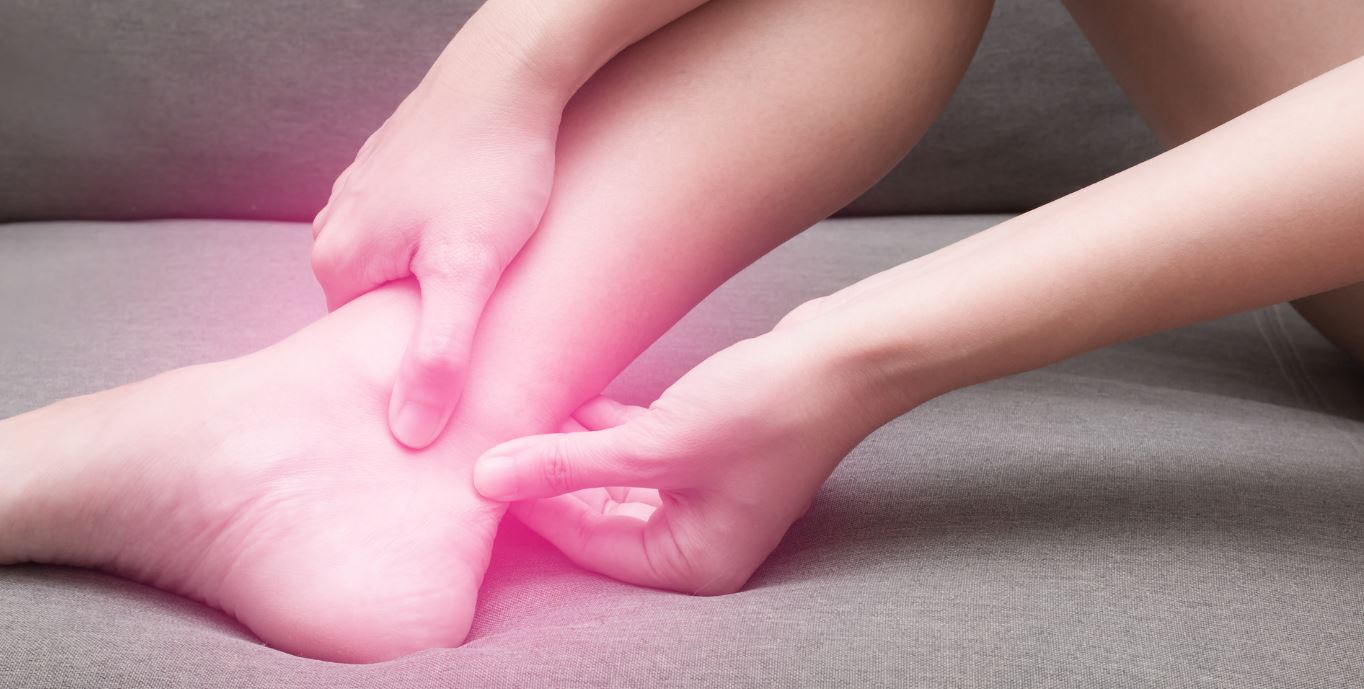
Ganglions in the foot are small, fluid-filled sacs that appear near joints and tendons. They are most frequently found on the top (dorsal) and bottom (plantar) surfaces of the foot. These ganglions can be different sizes, and while they are often harmless, they can cause problems depending on their location. Understanding where these ganglions form and how they function is important for managing various foot conditions.
Anatomically, foot ganglions can develop from synovial tissue, which is the soft tissue that lines joints and tendons. When this tissue becomes inflamed or irritated, it can produce excess fluid, leading to the formation of a ganglion cyst. These cysts can press on nearby nerves, muscles, or other tissues, which might cause pain or discomfort. For people with foot problems, such as bunions or arthritis, the presence of ganglion cysts could exacerbate their symptoms and influence their everyday activities.
Functionally, ganglions serve as a protective mechanism for the joints and tendons in the foot. By creating a fluid-filled space, they might help to reduce friction between moving parts. However, when they grow too large or become problematic, they can restrict movement and cause pain. It’s essential to recognize that pain sensation in the foot is often linked to the activity of ganglia in the spinal cord, particularly in the dorsal root ganglia. These structures are involved in relaying sensory information about pain, touch, and temperature from the foot to the brain. This connection explains why issues related to foot ganglions can lead to significant discomfort.
Clinically, ganglions have notable significance. For many patients, it’s crucial to distinguish between a harmless ganglion cyst and other conditions that might feel similar. Accurate diagnosis can help determine the right treatment. In some cases, a ganglion can resolve on its own, while in others, intervention may be necessary. Treatments can include observation, aspiration of the fluid, or surgical removal if the ganglion is causing severe symptoms or affecting foot function.
Recent advancements in treatment options have shown promise, particularly with the use of ultrasound-guided techniques. These procedures allow healthcare providers to accurately locate ganglions and provide targeted treatment. Research has shown that these methods can reduce pain effectively, improving mobility and quality of life for patients. Studies suggest that these ultrasound-guided approaches are less invasive than traditional surgical methods, making them an attractive option for those suffering from foot conditions linked to ganglions.
In summary, ganglions in the foot can significantly affect both anatomy and function. A clear understanding of their roles is vital for effective pain management and treatment of foot-related issues. Continuous research into the treatment of ganglion cysts holds promise for those seeking relief from discomfort and improved foot health., Ganglions in the foot can have important implications for a person’s health and well-being. These structures, which are often seen as small cysts around the joints or tendons, can lead to significant issues for those affected. They are not just minor problems; they can greatly impact mobility and the overall quality of life for patients. For example, when a ganglion pushes against nerves or surrounding tissues, it may cause pain and discomfort, making it difficult for individuals to walk comfortably (Gutteck et al., 2019).
The treatment for foot ganglions usually requires the collaboration of different healthcare professionals, including doctors, physical therapists, and sometimes surgeons. Depending on the severity of the ganglion and the symptoms, a doctor may suggest options like aspiration (removal of the fluid inside the ganglion) or even surgery to remove the ganglion entirely. Post-surgery, rehabilitation strategies are crucial. These may include physical therapy exercises designed to restore movement, strength, and function in the affected foot (Carolus et al., 2019; Latif et al., 2014). This teamwork helps improve the recovery process and ensures better functional outcomes for patients.
Another important aspect of ganglions is their connection to neuropathic pain, especially in individuals with conditions like diabetes. Neuropathic pain arises when nerves are damaged or irritated, and ganglions can sometimes contribute to this pain. For example, patients suffering from diabetic neuropathy may experience intense foot pain due to changes in their nerve function. In such cases, specialized treatments like dorsal root ganglion stimulation may be considered. This technique involves placing a small device near the dorsal root ganglion (a cluster of nerve cell bodies) to help manage pain better. This method has shown promising results in controlling neuropathic symptoms, bringing relief to those who struggle with chronic pain (Bhandari et al., 2022; Hunter & Yang, 2019).
Recognizing the clinical significance of ganglions in the foot is vital not just for doctors but also for patients. It helps in making accurate diagnoses and in developing effective treatment plans that address both the physical and emotional aspects of pain. Addressing these ganglions properly can lead to significant improvements in patients’ lives. As a result, treating foot-related ganglions can contribute to better mobility and an enhanced overall quality of life for individuals coping with associated pain (Harrison et al., 2018; Gutteck et al., 2019).
Citations:
Arshad, Z., Iqbal, A.M., Al Shdefat, S. and Bhatia, M., 2022. The management of foot and ankle ganglia: A scoping review. The Foot, 51, p.101899. https://www.sciencedirect.com/science/article/pii/S0958259221001255
Latif, A., Ansar, A. and Butt, M.Q., 2014. Treatment of ganglions; a five year experience. J Pak Med Assoc, 64(11), pp.1278-81. https://www.researchgate.net/profile/Ansar-Latif/publication/332551010_ARTICLE_8_ganglions/links/5cbccf5e92851c8d22fc2aa4/ARTICLE-8-ganglions.pdf
Carolus, A.E., Becker, M., Cuny, J., Smektala, R., Schmieder, K. and Brenke, C., 2019. The interdisciplinary management of foot drop. Deutsches Ärzteblatt International, 116(20), p.347. https://pmc.ncbi.nlm.nih.gov/articles/PMC6637663/
Gutteck, N., Schilde, S. and Delank, K.S., 2019. Pain on the plantar surface of the foot. Deutsches Ärzteblatt International, 116(6), p.83. https://pmc.ncbi.nlm.nih.gov/articles/PMC6435866/
Harrison, C., Epton, S., Bojanic, S., Green, A.L. and FitzGerald, J.J., 2018. The efficacy and safety of dorsal root ganglion stimulation as a treatment for neuropathic pain: a literature review. Neuromodulation: technology at the Neural Interface, 21(3), pp.225-233. https://www.sciencedirect.com/science/article/pii/S1094715921022078
Ju, B.L., Weber, K.L. and Khoury, V., 2017. Ultrasound-guided therapy for knee and foot ganglion cysts. The Journal of Foot and Ankle Surgery, 56(1), pp.153-157. https://www.sciencedirect.com/science/article/pii/S1067251616300709
Hunter, C.W. and Yang, A., 2019. Dorsal root ganglion stimulation for chronic pelvic pain: a case series and technical report on a novel lead configuration. Neuromodulation: Technology at the Neural Interface, 22(1), pp.87-95. https://www.sciencedirect.com/science/article/pii/S1094715921018547
Gregush, R.E. and Habusta, S.F., 2023. Ganglion cyst. In StatPearls [Internet]. StatPearls Publishing. https://www.ncbi.nlm.nih.gov/books/NBK470168/
Desy, N.M., Lipinski, L.J., Tanaka, S., Amrami, K.K., Rock, M.G. and Spinner, R.J., 2015. Recurrent intraneural ganglion cysts: pathoanatomic patterns and treatment implications. Clinical Anatomy, 28(8), pp.1058-1069. https://onlinelibrary.wiley.com/doi/abs/10.1002/ca.22615
Bhandari, R., Sharma, A. and Kuhad, A., 2022. Novel nanotechnological approaches for targeting dorsal root ganglion (DRG) in mitigating diabetic neuropathic pain (DNP). Frontiers in Endocrinology, 12, p.790747. https://www.frontiersin.org/articles/10.3389/fendo.2021.790747/full

University lecturer, runner, cynic, researcher, skeptic, forum admin, woo basher, clinician, rabble-rouser, blogger, dad.